
How to Choose the Right Tubular Motor Receiver for Different Gate Automation Systems
Gate automation systems have revolutionized access control for residential, commercial, and industrial properties. At the heart of these systems, the tubular motor receiver plays a pivotal role in translating remote control signals into smooth gate movement. However, not all receivers are created equal—matching the right receiver to your gate type (sliding, swing, roller shutter, etc.) is critical for reliability, security, and longevity. Let’s explore how to make the best choice.
1. Understand Your Gate Automation System Type
Different gate designs demand specific motor and receiver configurations. Here’s how receiver requirements vary by gate type:
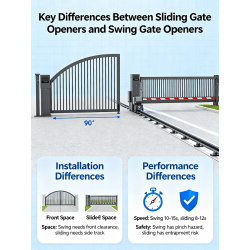
- Sliding Gates: These gates move horizontally along a track. Receivers for sliding gates must handle continuous linear motion, often requiring higher torque compatibility and anti-crush safety features (e.g., obstacle detection). Look for receivers with frequency stability to prevent signal interference during long travel distances.
- Swing Gates: Hinged to open outward or inward, swing gates rely on rotational motion. Receivers here need to support smooth start/stop functionality to avoid jarring movements, especially for heavy gates. Compatibility with dual-motor setups (for larger swing gates) is also key.
- Roller Shutters/Grilles: Vertical or horizontal rolling gates (e.g., shopfronts, garages) require receivers that sync with the motor’s rapid, repetitive motion. Prioritize receivers with high-frequency response and overload protection to handle frequent use.
- Barrier Gates (Parking/Access Control): These fast-acting, low-weight gates need receivers with ultra-responsive signal processing for quick open/close cycles, often integrated with access control systems (e.g., RFID, card readers).
2. Key Receiver Specifications to Prioritize
Beyond gate type, technical specifications define a receiver’s suitability:
- Frequency & Protocol Compatibility:
- Most tubular motor receivers operate on 433 MHz (common for residential systems) or 868 MHz (longer range, less interference for commercial use). Verify your remote control’s frequency matches the receiver.
- Check for rolling code technology (e.g., Hopping Code, AES encryption) to prevent unauthorized access—critical for security-focused properties.
- Compatibility with Motor & System:
Ensure the receiver is designed for your motor’s voltage (e.g., 24V DC, 230V AC) and control protocol (e.g., dry contact, bus communication). Mismatched voltage or protocol can cause malfunctions or damage.
- Signal Range & Reliability:
Consider the operating environment:
- For large properties or gates with obstructions (trees, buildings), choose receivers with extended range (up to 100m+ open field) or repeater support.
- Look for anti-interference features (e.g., frequency hopping, shielded circuitry) to avoid signal dropout from nearby electronics (WiFi, power lines).
- Safety & Compliance:
For gates with safety edges or photobeams, the receiver must support safety input/output to trigger emergency stops. Ensure compliance with standards like EN 12453 (gate safety) for European installations.
- Environmental Resilience:
Outdoor gates expose receivers to moisture, dust, and temperature extremes. Choose models with IP65/IP66 (water/dustproof) ratings and wide operating temperature ranges (-20°C to +60°C or higher) for durability.
3. Integration with Access Control & Smart Systems
Modern gate systems often integrate with smart home or business automation:
- If you use a smartphone app, keypad, or RFID reader, ensure the receiver supports multi-input control (e.g., dry contact, WiFi, Bluetooth modules).
- For security systems, look for receivers with alarm integration (e.g., trigger alarms on forced entry attempts).
4. Installation & Support Considerations
Even the best receiver needs proper installation:
- Choose a receiver with easy wiring (clearly labeled terminals, compatibility with your motor’s control box).
- Opt for brands with technical support (e.g., Hiland’s customer service) to troubleshoot pairing, range, or compatibility issues.
- Consider plug-and-play models for DIY installations, or consult a professional for complex systems.
5. Matching Receiver to Gate Size & Usage
Gate dimensions and usage frequency also matter:
- Heavy/Large Gates: Require receivers with high-power handling to support motors with higher torque (e.g., 1000N+). Prioritize robust build quality.
- High-Usage Gates (e.g., commercial entrances): Choose receivers with industrial-grade components (e.g., gold-plated contacts, heat-resistant circuitry) to withstand frequent cycling.
- Residential Gates: Balance cost and features—prioritize security (rolling code) and basic weather resistance.
Conclusion: A Perfect Match for Smooth Operation
Selecting the right tubular motor receiver is a blend of technical knowledge and understanding your gate’s unique needs. By prioritizing frequency, compatibility, security, range, and environmental resilience, you’ll ensure your gate automation system operates smoothly, securely, and efficiently for years to come. For tailored solutions, explore Hiland’s range of gate automation receivers—engineered to match every gate type and application.
Need help? Contact our team for personalized recommendations based on your gate system, usage, and security requirements!




Leave A Comment